
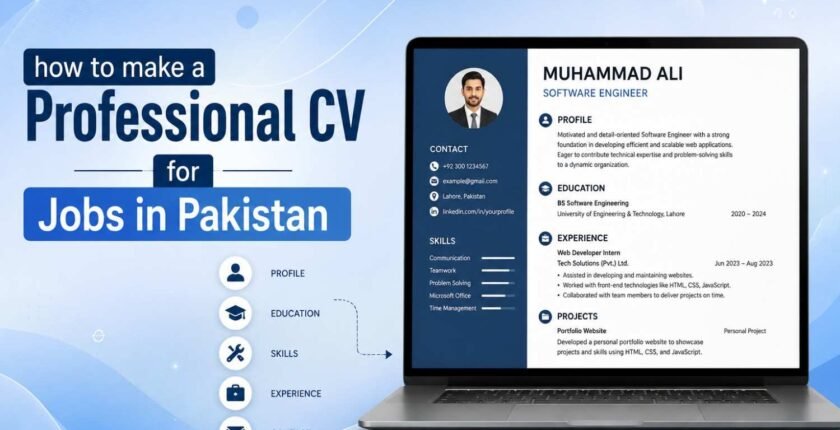
How to Make a Professional CV for Jobs in Pakistan
How to Make a Professional CV for Jobs
I still remember the first CV I helped a friend fix. He had applied to over thirty jobs and got zero replies. When I opened his file, I understood why within ten seconds. It was cluttered, generic, and clearly written in a rush.
Recruiters in Pakistan don’t read every CV word by word. They scan it, usually in under a minute, and decide whether you deserve a second look. If you don’t know how to make a professional CV for jobs that actually catches attention, even a strong candidate can get skipped. Your CV’s only real job is to get you the interview, nothing more. Whether you’re a fresh graduate, a student, or someone with years of experience, the approach changes slightly for each. Let me walk you through it properly.
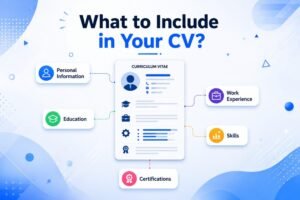
What Should You Include in a Professional CV?
This is the part where most people either win or lose the game.
Contact Information
Keep it simple. Full name, phone number, a professional email, your city, and a LinkedIn profile if you have one. Add a portfolio or GitHub link if it’s relevant to your field. Skip the CNIC, full home address, or father’s name unless the employer specifically asks for them.
Write a Strong CV Summary
Two to four lines is enough. It should tell the recruiter who you are, what you’re good at, and where you’re headed. Here’s a weak example: “Hardworking individual looking for a good job opportunity.” Now compare it to this: “Marketing graduate with hands-on experience in social media management, seeking to apply data-driven strategies in a digital marketing role.” The second one shows direction. That’s the difference between being ignored and being remembered.
Add Your Education
List your degree, institution, city, and graduation year. If you’re a fresh graduate, place education above experience, since recruiters expect academic background first when there’s little job history to show.
Add Relevant Work Experience
This is where most CVs fall apart. People write duties instead of results. A bad line reads: “Managed social media accounts.” A better one reads: “Managed social media content and increased monthly engagement through a consistent content strategy.” Always ask yourself what changed because you were there.
List Your Skills
Split them into technical skills like MS Office, WordPress, SEO, or programming, and soft skills like communication and teamwork. Match them to the job description instead of listing everything you’ve ever touched.
Certifications and Projects
Include only certifications relevant to the role, whether from Google, DigiSkills, or Coursera. If you’re a student in software engineering, IT, or design, a projects section can carry serious weight. List the project name, tools used, your contribution, and the result.
Internships and Volunteer Work
If you don’t have formal job experience, that’s completely normal. Present internships, freelance work, or volunteer roles the same way you would a job.
How to Format a Professional CV
Formatting is where good content often gets buried. Keep the layout clean, avoid heavy colors, and use professional fonts like Arial or Calibri. Body text should sit between 10 and 12 points, headings slightly larger. Stick to one or two pages, use bullet points instead of long paragraphs, and always save your file as a PDF so the formatting doesn’t shift when someone opens it.
| Element | Recommendation |
|---|---|
| Font | Arial, Calibri, Inter |
| Length | 1–2 pages |
| File format | |
| File name | FirstName_LastName_CV.pdf |
How to Make an ATS-Friendly CV
Many companies in Pakistan now use software called an Applicant Tracking System to filter CVs before a human sees them. If you want to know how to make a professional CV for jobs that actually gets through this filter, keep your layout simple. Use standard headings, include keywords straight from the job description, and avoid putting important details inside images or tables, since the system often can’t read them.
You may also like: How to Prepare for an Interview: 15 Proven Tips to Get Hired
How to Tailor Your CV for Every Job
Here’s a mistake almost everyone makes early in their career. They build one CV and send the exact same version to every job. That rarely works. Build a master CV containing everything you’ve ever done, then create a customized version for each specific application. Applying for a digital marketing role means highlighting SEO, Google Ads, and Analytics. Applying for a content writing job means pushing SEO writing and research forward. Applying for a developer position means leading with programming languages and Git. This small extra effort often decides whether you get called in or ignored.
Professional CV Example for a Fresh Graduate
Muhammad Ahmed, Software Engineering Graduate, Islamabad
Summary: Software engineering graduate with strong foundations in Java and Python, seeking an entry-level developer role.
Education: BS Software Engineering, COMSATS University, 2026
Skills: Java, Python, MySQL, Git
Projects: Library Management System using Java and MySQL
Internship: Software Development Intern, XYZ Solutions, three months
Certifications: Google IT Support Certificate
Common CV Mistakes to Avoid
- Spelling and grammar mistakes
- Unprofessional email addresses
- Making the CV too long
- Listing duties instead of achievements
- Using the same CV for every job
- Fake skills or exaggerated experience
- Low-quality photos
- Submitting without proofreading
I have reviewed CVs where one spelling mistake in the first line made me question everything after it. That’s how much small details matter here.
Should You Add a Photo or CNIC to Your CV?
Some Pakistani employers, especially in government or traditional sectors, still ask for a photo or CNIC number. But it isn’t a universal rule anymore. If the job posting specifically requests it, include it. If not, you’re generally better off leaving it out, particularly for companies using ATS software.
Frequently Asked Questions
What is the best way to make a professional CV for jobs in Pakistan?
Keep it simple, reverse-chronological, and tailored to the specific role. Recruiters expect your most recent education or experience listed first.
How many pages should a CV be?
One page for fresh graduates, one to two pages for experienced professionals.
Should a fresh graduate include projects?
Yes. Projects often carry more weight than people expect, especially in technical fields.
Should I send my CV in Word or PDF?
PDF is almost always safer since it keeps your formatting intact.
Can I make a professional CV without work experience?
Yes. Lean on education, projects, and internships instead.
Should I include my CNIC number?
Only if the employer specifically asks for it during the application process.
Final Tips
Learning how to make a professional CV for jobs isn’t about making it look complicated. It’s about being clear, honest, and specific about what you bring to the table. Keep it relevant, keep it readable, and update it as your skills grow. Once you get that right, the interview calls tend to follow.
Pingback: Best Jobs in Pakistan for Fresh Graduates in 2026
Pingback: Create a Professional LinkedIn Profile for Job Hunting